News + Events

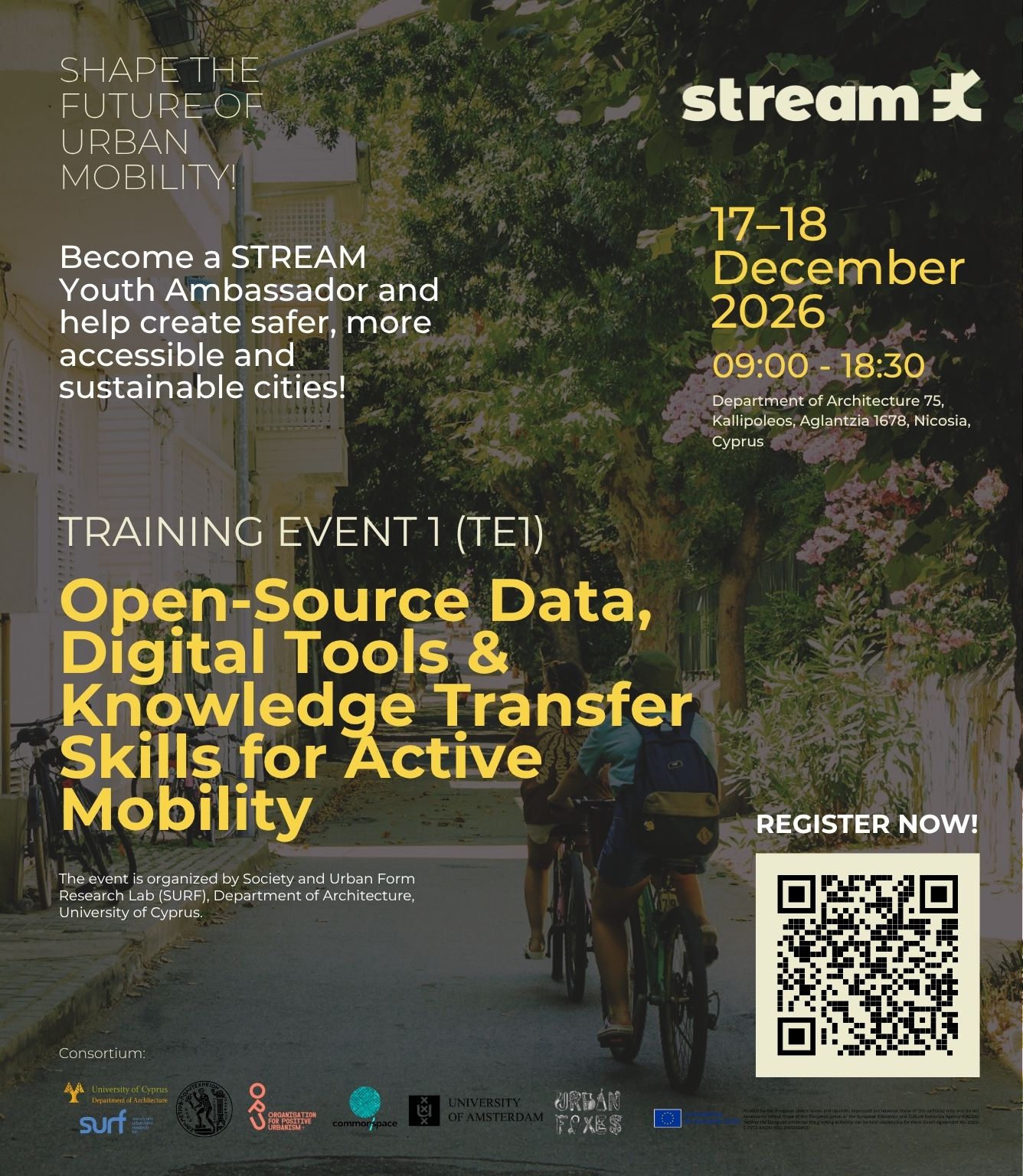
The Society and Urban Form Research Lab (SURF Lab) at the University of Cyprus invites young people, university students, researchers, educators, youth workers and representatives of youth organisations to participate in the first Training Event (TE1) of the Erasmus+ project STREAM – Sustainable sTRategies for Empowering Active Mobility, taking place on 17–18 December 2026 in Nicosia, Cyprus.

Entitled “Open-Source Data Use, Digital Tools & Knowledge Transfer Skills for Active Mobility”, the two-day training will introduce participants to digital mapping tools and open-source spatial data, exploring how these resources can help identify challenges and opportunities for safer, more accessible and sustainable urban mobility.

About the Training

The training combines interactive presentations, demonstrations and hands-on exercises, giving participants the opportunity to develop practical skills while exploring real-world mobility challenges. The programme is structured around two complementary themes:

  • Day 1 | 17 December 2026 – Open-Source Data Use & Digital Tools: Participants will explore open-data sources, learn to prepare and analyse spatial datasets using tools such as QGIS, and examine walking, cycling and accessibility networks in urban environments.
  • Day 2 | 18 December 2026 – Knowledge Transfer & Application: The focus will shift to communicating spatial findings through maps, visualisations and data storytelling, as well as exploring how digital information can support participatory planning and practical improvements to urban mobility.

Become a STREAM Youth Ambassador

Beyond the training itself, STREAM is seeking young people aged 15–24 interested in becoming STREAM Youth Ambassadors and contributing not only in this training but also in future project activities. Youth Ambassadors will have opportunities to share their everyday mobility experiences, represent young people’s perspectives and participate in collaborative initiatives addressing challenges related to walking, cycling and accessibility. Their involvement will help ensure that the project’s activities reflect the needs and priorities of young people, while offering opportunities to develop new skills and take an active role in shaping their communities.

Event Details & Registration

Dates: 17–18 December 2026
Time: 09:00–18:30
Venue: Department of Architecture 75, Kallipoleos, Aglantzia 1678, Nicosia, Cyprus
Language: English
Format: Interactive training, demonstrations, hands-on exercises and collaborative workshops

The training is open to young people aged 15–24, university students, researchers, academic staff, educators, youth workers and representatives of youth and community organisations interested in sustainable urban mobility.

Participants are requested to bring their own laptops. Further instructions regarding QGIS software and practical exercises will be provided before the event.

Registration Form: https://forms.gle/tYePxVTRotn4QXnE7

Registration Deadline: 30 November 2026

The detailed programme and additional practical information will be shared with registered participants at a later stage.

Organisations working with young people are also encouraged to share this opportunity with their members and wider networks.

Join us to explore how digital tools, open data and youth participation can contribute to safer, more accessible and sustainable urban mobility!

For further details about the training, please refer to the event poster and the participation invitation.
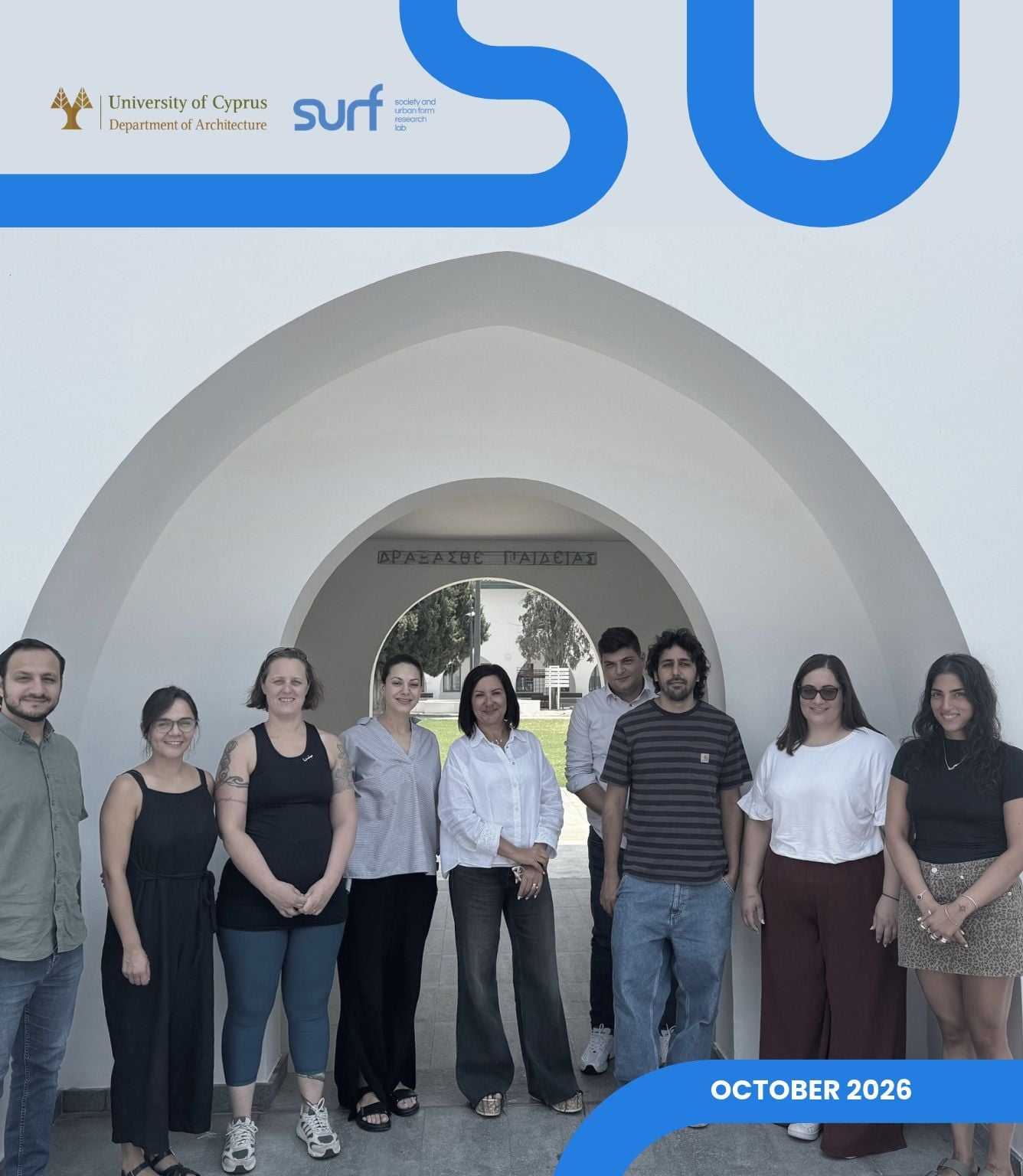
Our Lab is pleased to share the October 2026 issue of its Biannual Newsletter, featuring research updates, project developments, publications, and activities from the past few months.

This edition covers the Lab’s involvement in a range of European research initiatives in which we explore topics such as sustainable urban mobility, climate resilience, urban health, green infrastructure, accessibility, and participatory approaches to urban planning. Alongside research, we look back at recent conferences, workshops, and public engagement activities in Cyprus and across Europe, sharing and exchanging knowledge with international partners, and engaging with communities on challenges affecting contemporary cities.

Among the highlights is the SURF Pitchbook 2026, which provides an overview of our research activities, projects, and collaborations.

We invite you to explore the October issue and learn more about our work!

🔗 Read our Newsletter: https://shorturl.ly/pTwoI

🔎 Explore the interactive flipbook: https://shorturl.ly/jBxlx

Stay connected with us on LinkedIn for updates on our latest activities, projects, and events.

How can young people contribute to making our cities more accessible, inclusive and welcoming for everyone?

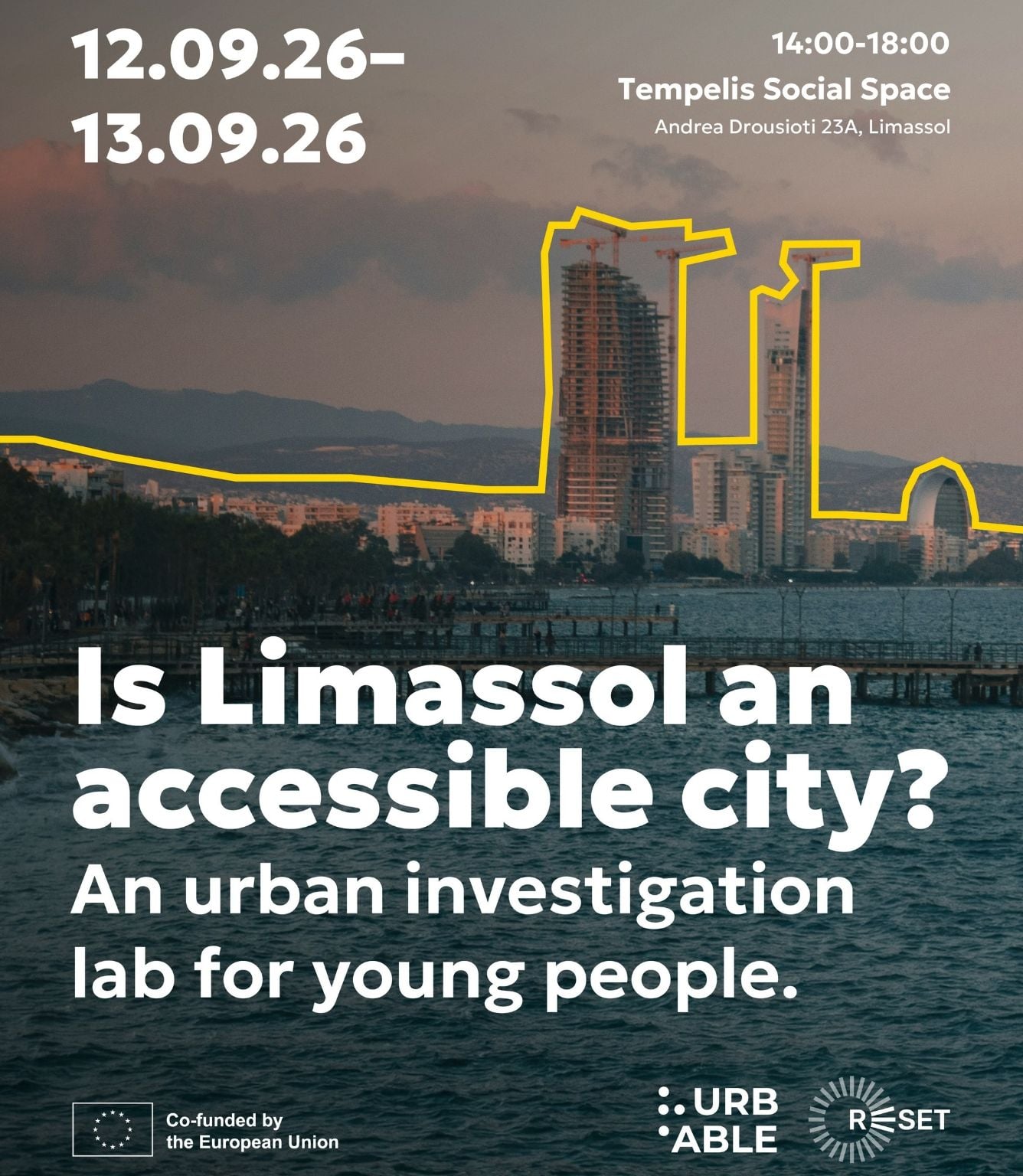
On 12–13 September 2026, the URB.ABLE project will host the Urban Investigation Lab, a free two-day, hands-on workshop in Limassol exploring accessibility, Universal Design and inclusive approaches to urban planning.

URB.ABLE is an Erasmus+ initiative that empowers young people and youth workers to take an active role in transforming their communities into more accessible and inclusive environments. Through practical learning and collaborative activities, the project encourages participants to look critically at the spaces around them and consider how everyday urban environments can better respond to different needs.

During the Urban Investigation Lab, participants will be introduced to the principles of Universal Design and inclusive urban planning in a session led by Marina Pasia, our researcher from the Society and Urban Form (SURF) Research Lab, Department of Architecture, University of Cyprus.

The workshop will then move beyond the classroom and into the city itself. Through barrier-mapping activities in Limassol’s old town, participants will investigate accessibility challenges directly within the urban environment, identifying physical and other barriers that can affect how people experience and use public spaces.

Building on these observations, participants will work together to develop ideas for civic action and explore how young people can play a meaningful role in shaping more inclusive public spaces. This part of the programme will be led by the AbleBook founders, bringing an additional practical perspective to the discussion around accessibility and community-led urban change.

The two-day format therefore combines learning, direct observation and collaborative thinking, giving participants the opportunity not only to discuss inclusive urban environments but also to examine accessibility challenges first-hand and consider possible responses.

📅 12–13 September 2026
🕑 14:00–18:00
📍 Social Space, Andrea Drousioti 23a, 3040 Limassol
🎟️ Participation is free

Participants who complete the workshop will receive a Europass Certificate.

Interested in participating?

🔗 Learn more about the Urban Investigation Lab: https://t.ly/oMCZN

📝 Register here: https://t.ly/fFpPM

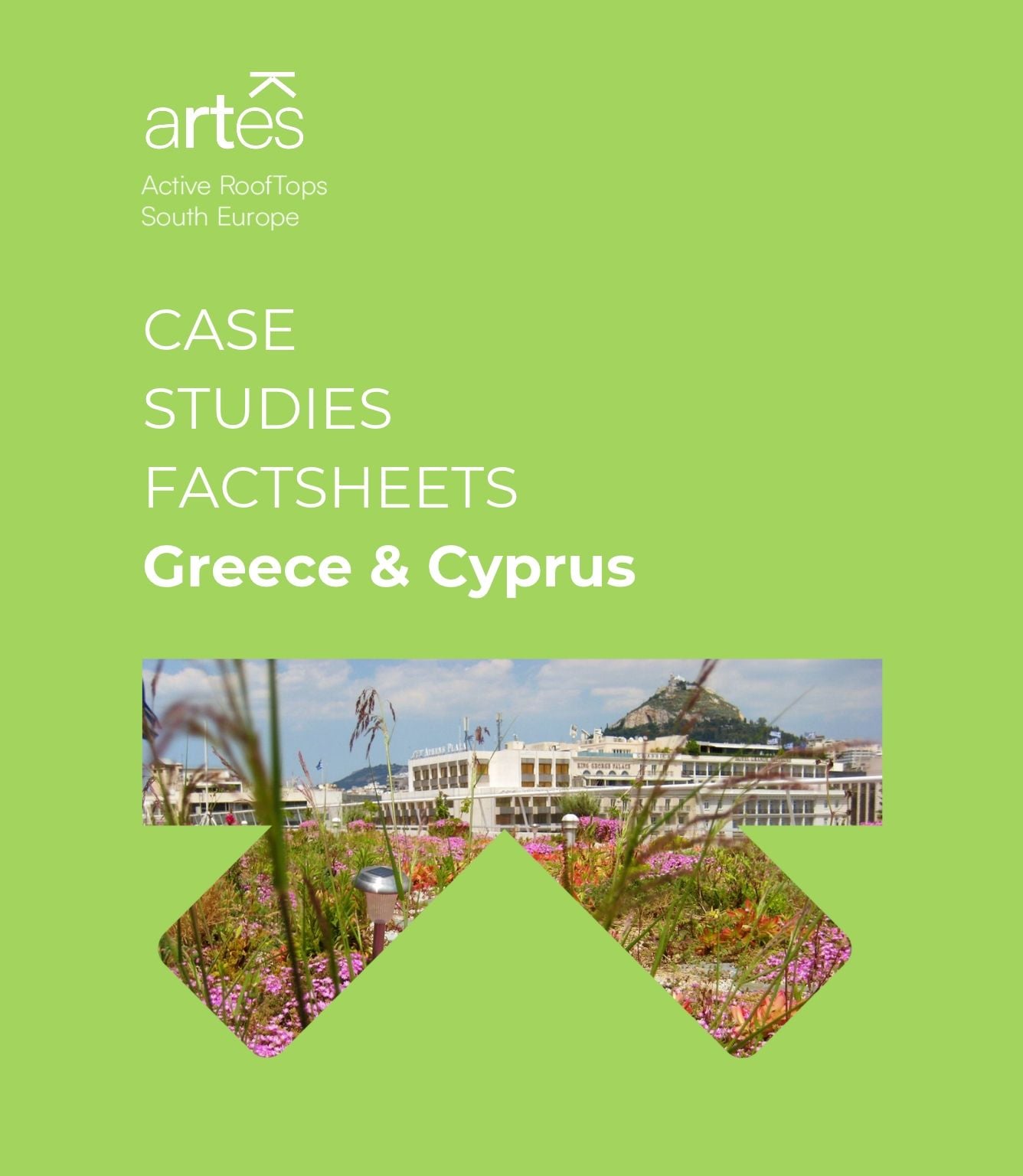
The Greece & Cyprus Case Studies Factsheets, prepared within the Active RoofTops South Europe (aRTes) project, showcase inspiring rooftop interventions from the Eastern Mediterranean, highlighting the significant potential of existing rooftops to support climate resilience and sustainable urban development.

The publication presents a selection of case studies including green roofs, school retrofits and hybrid rooftop systems that combine green infrastructure with renewable energy technologies. Together, these examples demonstrate practical approaches to improving thermal performance, biodiversity, stormwater management and the overall environmental performance of buildings.

The factsheets provide valuable knowledge for researchers, planners, architects and decision-makers seeking innovative rooftop solutions suitable for Mediterranean cities.

📄 Download the Greece & Cyprus Case Studies Factsheets

📖 Browse the interactive flipbook

Country research lead: Michalis Psaras

Authors: Marina Pasia, Ilaria Geddes, Michalis Psaras, Larissa Ribeiro Cunha, Raquel Guerra Aragonés, Riccardo Urbano and Veronika Antoniou.

🌐 Visit the aRTes website | Instagram | LinkedIn

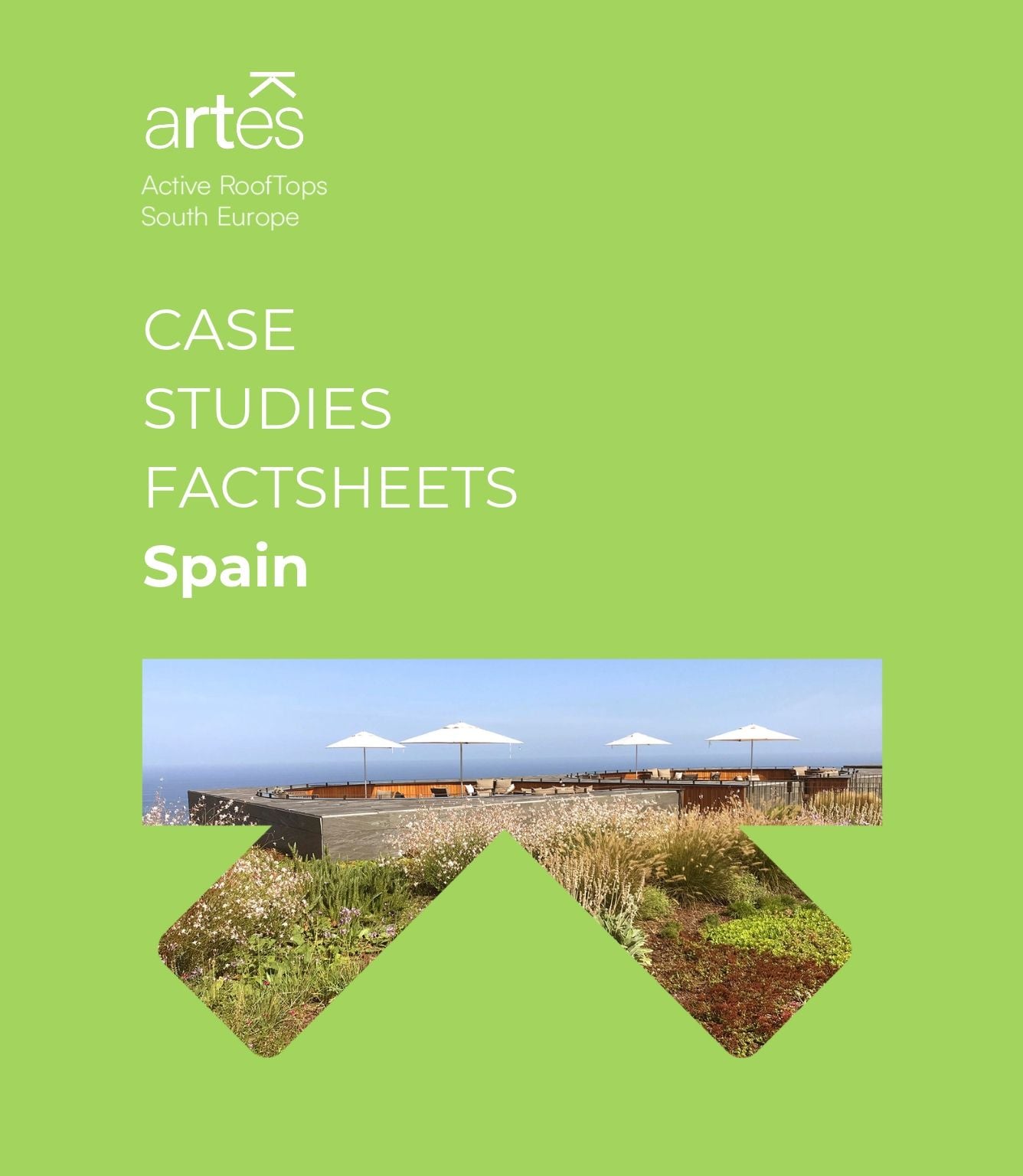
The Spain Case Studies Factsheets, developed within the Active RoofTops South Europe (aRTes) project, present a diverse collection of rooftop interventions demonstrating the potential of rooftops to support more sustainable, resilient and liveable cities.

Featuring examples such as green hotels, productive rooftop orchards, residential rooftop gardens and biodiversity-focused developments, the publication highlights practical approaches that integrate nature-based solutions into the built environment.

The case studies demonstrate how rooftops can simultaneously improve biodiversity, strengthen climate adaptation, enhance thermal performance and create attractive spaces for communities while contributing to more sustainable urban futures.

📄 Download the Spain Case Studies Factsheets

📖 Browse the interactive flipbook

Country research lead: Raquel Guerra Aragonés

Authors: Marina Pasia, Ilaria Geddes, Michalis Psaras, Larissa Ribeiro Cunha, Raquel Guerra Aragonés, Riccardo Urbano and Veronika Antoniou.

🌐 Visit the aRTes website | Instagram | LinkedIn

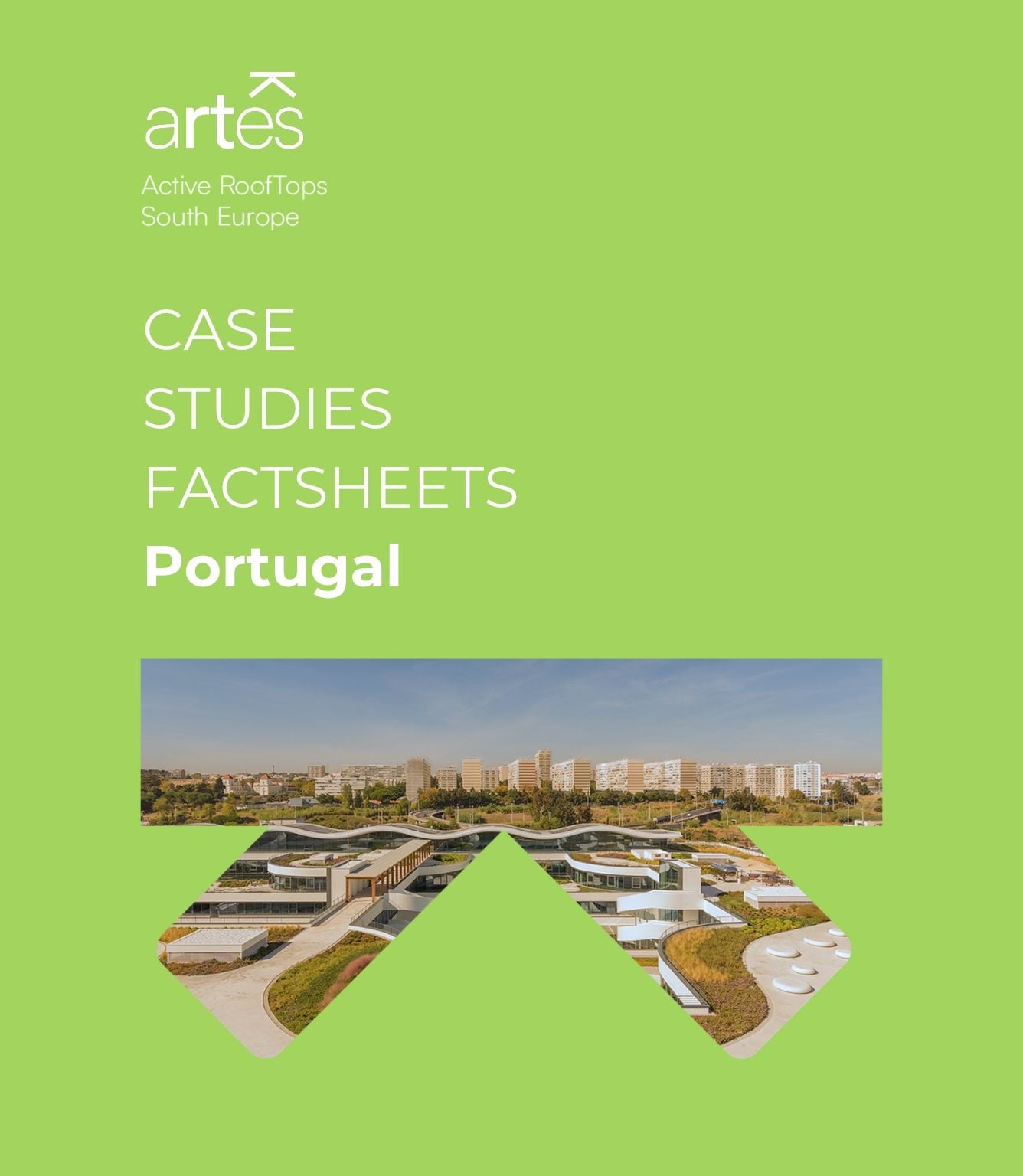
The Portugal Case Studies Factsheets present innovative examples of rooftop transformation developed within the Active RoofTops South Europe (aRTes) project demonstrates how rooftops can become multifunctional environments that combine green infrastructure, renewable energy, education and climate resilience.

The featured projects illustrate how accessible rooftops can function as green campuses, living laboratories and public learning environments while contributing to biodiversity enhancement, water management, thermal comfort and sustainable urban development.

The publication aims to support knowledge exchange by showcasing practical solutions that can inspire future rooftop interventions across Southern Europe and beyond.

📄 Download the Portugal Case Studies Factsheets

📖  Browse the interactive flipbook

Country research lead: Larissa Ribeiro Cunha

Authors: Marina Pasia, Ilaria Geddes, Michalis Psaras, Larissa Ribeiro Cunha, Raquel Guerra Aragonés, Riccardo Urbano and Veronika Antoniou.

🌐 Visit the aRTes website | Instagram | LinkedIn

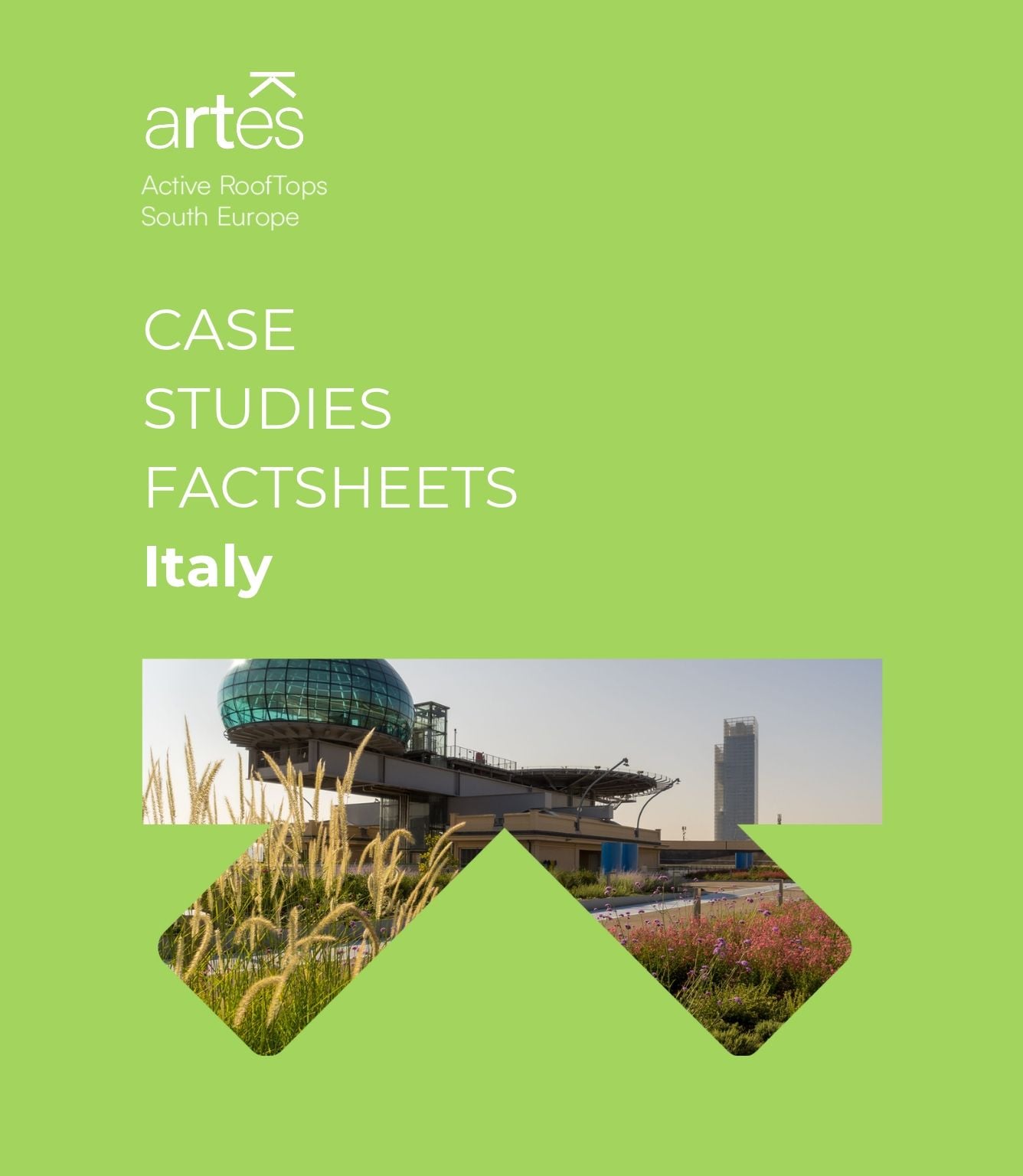
The Italy Case Studies Factsheets, developed within the Active RoofTops South Europe (aRTes) project, showcase inspiring examples of rooftop regeneration that combine biodiversity, recreation, cultural heritage and urban innovation.

From iconic industrial heritage sites transformed into biodiversity parks to green workplace environments and multifunctional public spaces, the publication highlights how rooftops can become valuable urban assets while improving environmental performance and quality of life.

The case studies illustrate practical approaches that integrate ecological functions with public space, landscape design and sustainable urban regeneration, providing transferable knowledge for future rooftop interventions across Southern Europe.

📄 Download the Italy Case Studies Factsheets

📖 Browse the interactive flipbook

Country research lead: Riccardo Urbano

Authors: Marina Pasia, Ilaria Geddes, Michalis Psaras, Larissa Ribeiro Cunha, Raquel Guerra Aragonés, Riccardo Urbano and Veronika Antoniou.

🌐 Visit the aRTes website | Instagram | LinkedIn

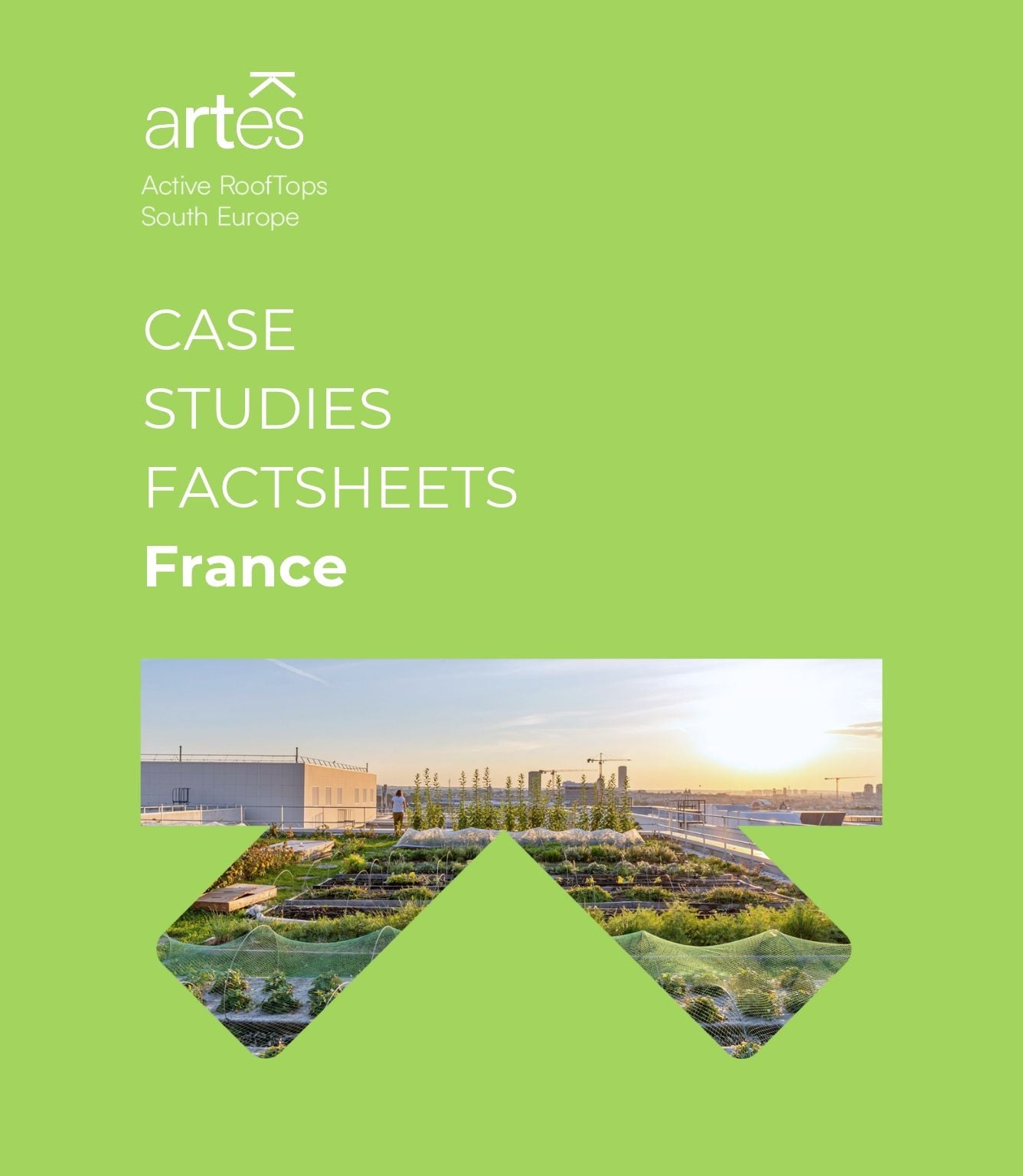
The Active RoofTops South Europe (aRTes) project has released the France Case Studies Factsheets, a publication presenting inspiring examples of rooftop transformation across France. The factsheets demonstrate how underutilised rooftops can evolve into productive, ecological and multifunctional urban spaces that contribute to more resilient and sustainable cities.

The featured case studies showcase a variety of rooftop interventions, including productive urban farms, vegetated heritage buildings and activated cultural rooftops. Together, these examples illustrate how rooftop regeneration can support urban agriculture, biodiversity enhancement, public space activation and climate adaptation while respecting the architectural identity of existing buildings.

By documenting successful projects from France, the publication provides valuable inspiration for architects, planners, researchers, policymakers and other stakeholders interested in innovative rooftop solutions and sustainable urban development.

📄 Download the France Case Studies Factsheets

📖 Browse the interactive flipbook

Country research lead: Veronika Antoniou

Authors: Marina Pasia, Ilaria Geddes, Michalis Psaras, Larissa Ribeiro Cunha, Raquel Guerra Aragonés, Riccardo Urbano and Veronika Antoniou.

🌐 Visit the aRTes website | Instagram | LinkedIn

The U-Care project is pleased to announce its final event, the Urban Health Conference: “Shaping Healthy and Climate-Responsive Cities”, taking place on 2 October 2026 in Berlin, Germany, with the opportunity to participate both in person and online.

Marking the conclusion of the U-Care research project, the conference will bring together researchers, urban planners, architects, landscape architects, public health professionals, policymakers, designers and citizens to explore how urban environments can respond to climate change while promoting human health.

Through keynote lectures, live demonstrations, interactive discussions and networking opportunities, participants will explore evidence-based strategies, innovative tools and practical approaches for creating healthier, more resilient and climate-responsive cities.

A highlight of the programme will be a keynote by Prof. Jacob van Rijs, Founding Partner of MVRDV, focusing on “Design Strategies for Healthier Architecture”. The programme will also present the U-Care research and UrbanCare methodology, training modules, U-Care platform and guide, as well as the project’s contributions to climate mitigation, research, urban practice and capacity building.

📅 Date: 2 October 2026
🕑 Time: 14:00–19:00
📍 Venue: Bauhaus Reuse (BHROX), Ernst-Reuter-Platz, Berlin
💻 Participation: In person or online
🎟️ Admission: Free – registration required
🗣️ Language: English

More information and registration:
https://ucareproject.eu/

Download the Event Leaflet